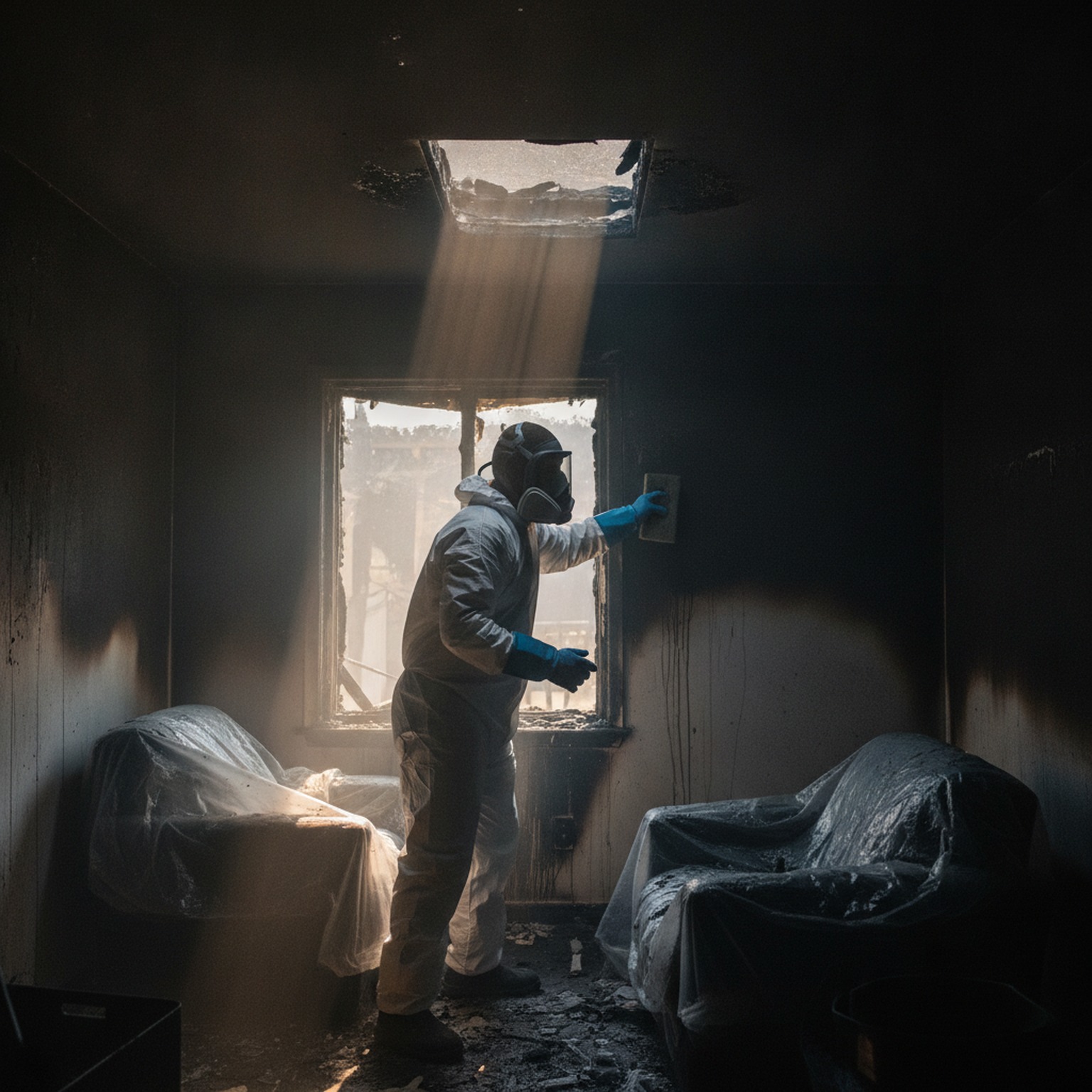
Every fire damage timeline is different, but the phases are consistent. Knowing what happens at each stage — and roughly how long it takes — makes an overwhelming process feel a lot more manageable.
Day 1-2: Safety, Assessment, and Securing the Structure
Once the fire department clears the structure as safe to enter, the first priority is securing it — boarding up broken windows, tarping roof damage, and controlling access. A restoration team assesses the extent of fire, smoke, and water damage (firefighting water is its own damage source) and puts together an initial scope.
Day 2-5: Cleanup and Content Assessment
Soot and smoke cleaning begins on structural surfaces — walls, ceilings, trim — using chemistry matched to the type of soot (dry, wet, or protein-based residue leaves very different films). At the same time, salvageable contents are assessed: what can be cleaned and restored versus what's a total loss. Items worth saving often go through a pack-out to a separate facility so cleaning doesn't have to happen in a construction zone.
Day 3-7: HVAC and Odor Treatment
Smoke travels through ductwork and settles in rooms far from where the fire started, so HVAC systems need inspection and cleaning — skipping this step means smoke odor gets redistributed every time the system runs. Odor treatment (thermal fogging, ozone, or hydroxyl generators depending on severity) typically runs in parallel with structural cleaning.
Week 1-2: Scope Finalization for Reconstruction
Once cleaning is complete, what's left is clear: which framing, drywall, flooring, and finishes need to be replaced versus cleaned and kept. This is where mitigation ends and reconstruction begins — and it's the point where projects that switch to a different contractor often see the biggest delays, since a new crew has to re-inspect and re-scope work someone else already assessed.
Week 2 to Several Months: Reconstruction
This is the widest range in the whole timeline, and it depends entirely on scope:
- Cosmetic smoke damage (cleaning and repainting only) — often wrapped up within 2-3 weeks total
- Moderate damage (some drywall, flooring, and trim replacement) — commonly 4-8 weeks
- Major structural damage (framing, multiple rooms, kitchen or bath rebuilds) — 3-6 months is realistic, sometimes longer for large or older homes
What Actually Speeds Things Up
- One crew, start to finish. Projects that move from mitigation straight into reconstruction with the same team avoid the re-scoping delay of a contractor handoff.
- Fast material decisions. Selecting flooring, cabinetry, and finishes early prevents reconstruction from stalling on back-ordered materials.
- Clear insurance coordination. Restoration companies that document damage thoroughly and communicate directly with your adjuster keep approvals from becoming the bottleneck.
What Slows Things Down
- Waiting to report the fire or delaying the initial call
- Discovering additional damage mid-project (common with older wiring or hidden water intrusion from firefighting)
- Material and contractor availability, especially after a widespread event affecting many properties at once
Realistic Expectations
For a single-room fire with contained smoke damage, expect roughly 3-6 weeks from first call to move-back-in. For a fire affecting multiple rooms or requiring structural rebuild, 2-4 months is a more honest estimate. Any contractor promising a firm timeline before a full assessment is guessing — get the walkthrough first.
Dealing with fire or smoke damage right now? Call 844-967-5247 for 24/7 dispatch, or [request an assessment](/quote).