Water damage and mold get talked about together so often that it's easy to assume every wet spot turns into a health crisis. That's not quite accurate — but the situations where it does matter, matter a lot. Here's a clearer picture.
Why Mold Follows Water Damage
Mold spores exist almost everywhere, indoors and out, in low background concentrations. They only become a problem when they find moisture, an organic food source (drywall paper, wood, dust), and time — often as little as 24 to 48 hours in wet material. Any water event that isn't fully dried within that window creates the conditions mold needs.
When It's Usually Manageable
- Small, isolated area (under roughly 10 square feet) of visible growth on a non-porous surface
- Caught and dried fast — extraction and drying began within a day or two of the water event
- No underlying moisture source still active — the leak is fixed, not ongoing
In these situations, a smaller cleanup — sometimes just thorough cleaning and drying of a hard surface — may be sufficient, though a professional assessment is still worth getting if you're unsure.
When It's a Real Problem
- Musty odor with no visible growth — often means mold is established inside a wall cavity, under flooring, or in ductwork where you can't see it
- Growth larger than about 10 square feet
- Recurring mold after a previous cleaning attempt — a sign the moisture source was never actually fixed
- Mold following any Category 2 or 3 water event (gray or black water) — contamination adds a separate health risk on top of the mold itself
- Symptoms in occupants — respiratory irritation, allergy-like symptoms, or worsening asthma that improve when away from the property
The Health Risk Is Real, But Proportional
Mold exposure affects people differently — some individuals, especially those with asthma, allergies, or compromised immune systems, react to levels that wouldn't bother others. The presence of mold doesn't automatically mean a medical emergency, but it also isn't something to leave unaddressed once it's identified, particularly in cases involving young children, older adults, or anyone with respiratory conditions.
Why DIY Cleaning Often Fails
Surface cleaning — bleach, cleaning sprays, a scrub brush — can remove visible mold from a hard surface but does nothing about:
- Airborne spores released into the room during cleaning
- Mold growing inside porous materials (drywall, insulation) that can't be fully cleaned
- The moisture source that let mold grow in the first place
This is exactly why mold "comes back" after a homeowner cleans it themselves — the visible symptom was addressed, not the underlying cause.
What Real Remediation Looks Like
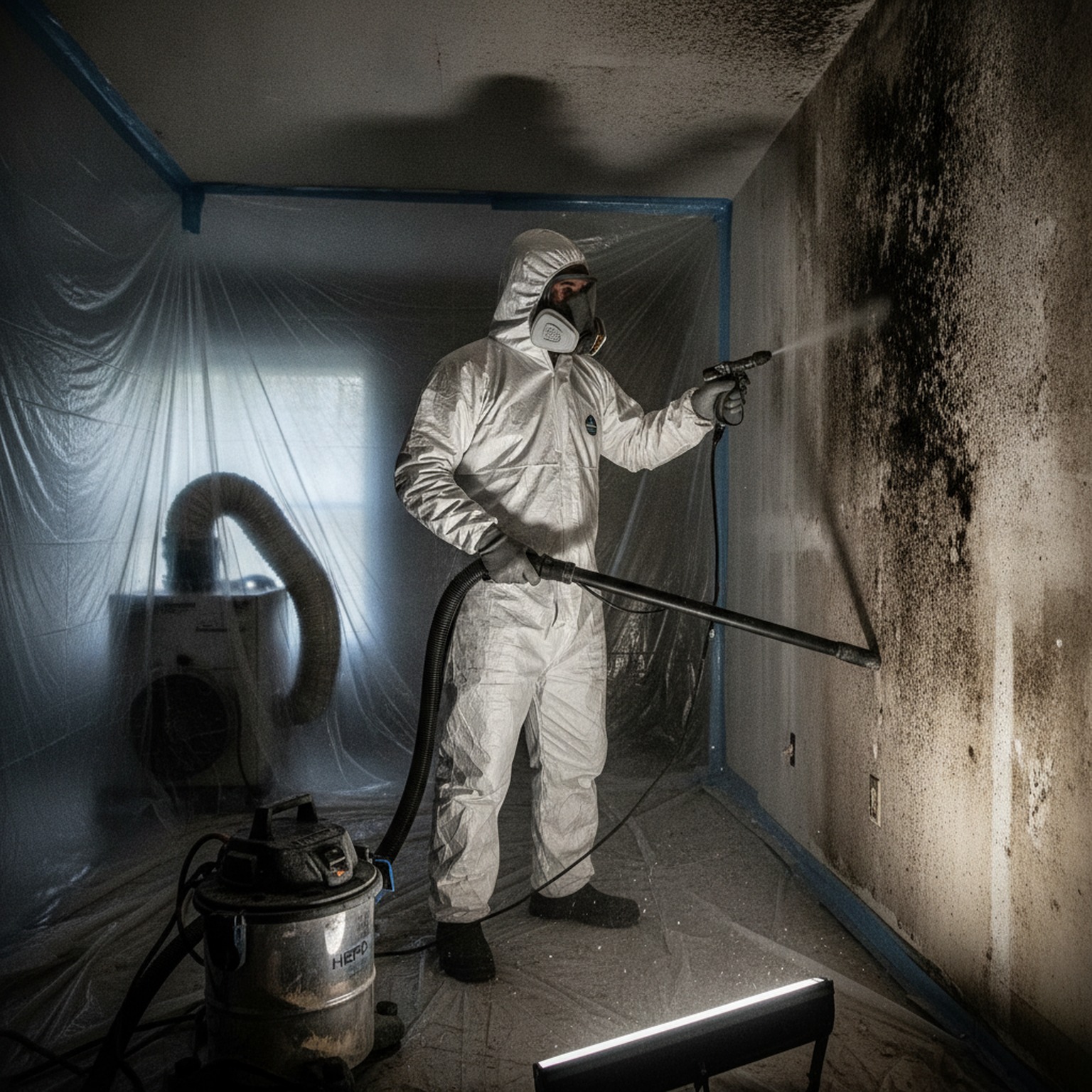
- Containment with negative air pressure so spores don't spread to unaffected rooms
- Removal of contaminated porous material that can't be fully cleaned
- HEPA air scrubbing to clear airborne spores during and after the work
- Moisture source correction — the leak, humidity, or ventilation issue is fixed, not just the visible mold
The Bottom Line
Small, fast-caught, isolated mold on a hard surface is manageable. Musty odors without visible growth, recurring mold, anything following contaminated water, or growth larger than a small patch warrants a professional remediation assessment — not because every mold spore is dangerous, but because you can't tell from the surface how far it's actually spread.
Concerned about mold after water damage? Call 844-967-5247 or [request a free assessment](/quote).