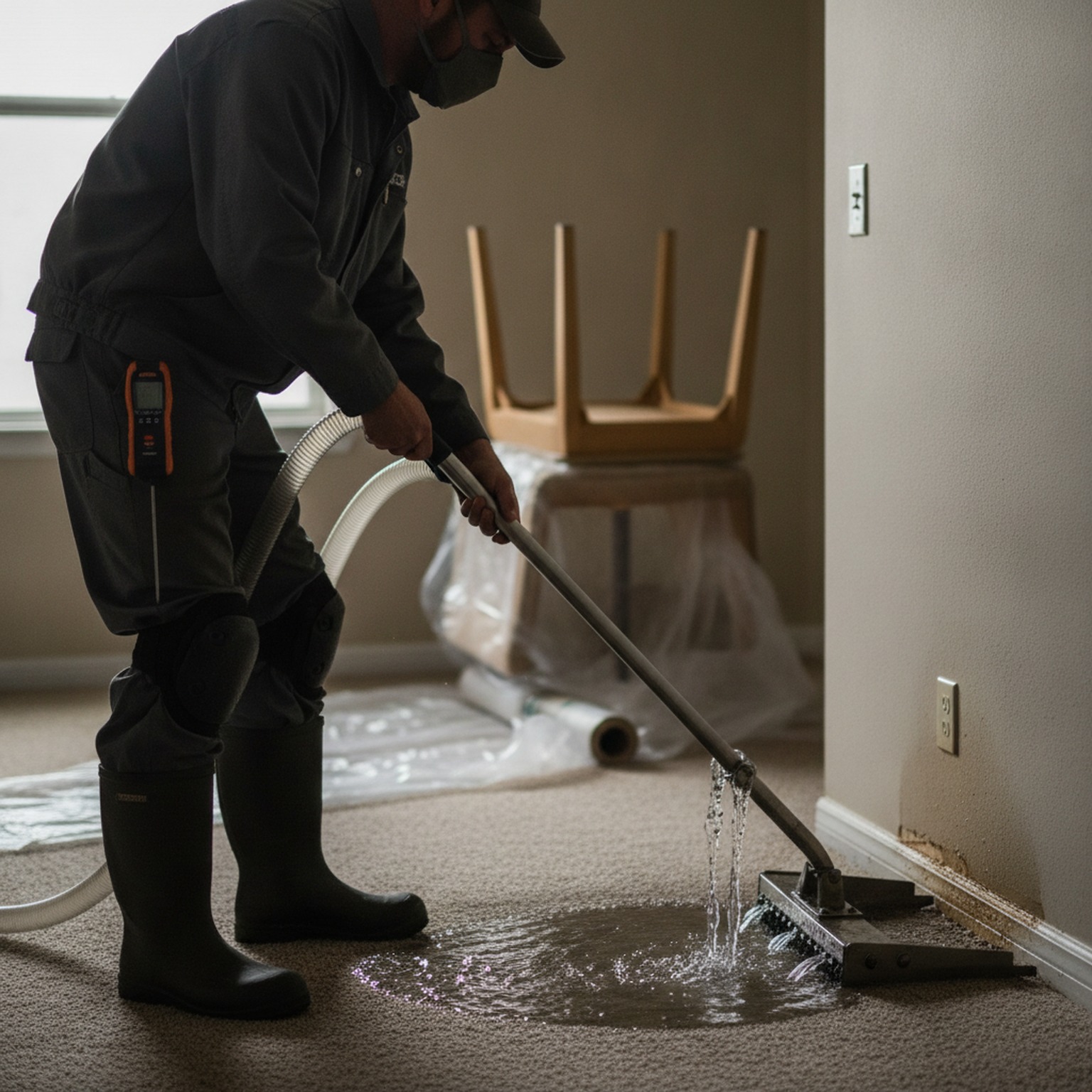
A burst pipe doesn't wait for a convenient time, and neither does the damage it causes. Water spreads fast, wicks into drywall and subfloor within hours, and sets up conditions for mold within a day or two. What you do in the first 24 hours has more impact on the final cost and scope of repair than almost anything that happens afterward.
Step One: Stop the Water Source
Before anything else, shut off the water at the main supply valve if you can locate it safely. If the burst is from a specific fixture — a washing machine hose, a water heater, a supply line — shutting off that fixture's local valve may be enough. If you're not sure, cut power to any affected electrical circuits before touching anything near standing water.
Step Two: Call for Emergency Extraction
Every hour water sits is an hour it spreads further into wall cavities, subfloor, and framing. A 24/7 restoration crew can typically be on-site the same day, and getting extraction equipment running early is the single biggest factor in whether materials dry in place or have to be torn out.
Step Three: Document Before You Move Anything
Take photos and video of the affected area before you start moving furniture or removing anything — standing water, wet flooring, damaged belongings. This documentation matters for insurance and gives the restoration crew a clear starting point.
Step Four: Remove What You Safely Can
- Move furniture and rugs off wet flooring if you can do it without wading through standing water
- Pick up loose items, cords, and electronics from the floor
- Prop up furniture legs on foil or blocks to prevent staining and wicking
- Do NOT attempt to move heavy, waterlogged furniture alone — wait for the crew
Step Five: Increase Airflow, But Don't Overdo It
Opening windows and running fans can help in mild, clean-water situations, but don't rely on box fans alone for anything beyond a small spill — they don't move enough air or reach into wall cavities. Commercial air movers and dehumidifiers, set up correctly by a restoration crew, are what actually dry a structure to a safe standard.
What Happens When the Crew Arrives
A professional response typically follows this order:
- Extraction — remaining standing water pulled out immediately
- Classification — clean water (Category 1), gray water (Category 2), or contaminated black water (Category 3) determined on-site, which changes the containment and disposal approach
- Moisture mapping — meters and thermal imaging locate water that's migrated into walls, subfloor, and framing where it isn't visible
- Drying setup — air movers and dehumidifiers placed and monitored daily until materials read dry, not just look dry
The 24-48 Hour Mold Clock
Mold spores are present in nearly every environment and need only moisture, warmth, and time to establish — often as little as 24 to 48 hours in wet drywall or wood. This is the real reason speed matters: a same-day extraction and drying setup can mean the difference between a dry-in-place recovery and a full tear-out with mold remediation added to the scope.
When to Call, Not Wait
If you have active water intrusion of any kind — burst pipe, appliance failure, roof leak during a storm — the right move is to call immediately, even overnight or on a weekend. Restoration companies that run 24/7 dispatch exist specifically for this window, when a same-day response changes the outcome.
Have an active water emergency right now? Call 844-967-5247 for 24/7 dispatch, or [request service online](/quote) if it's not an active emergency.