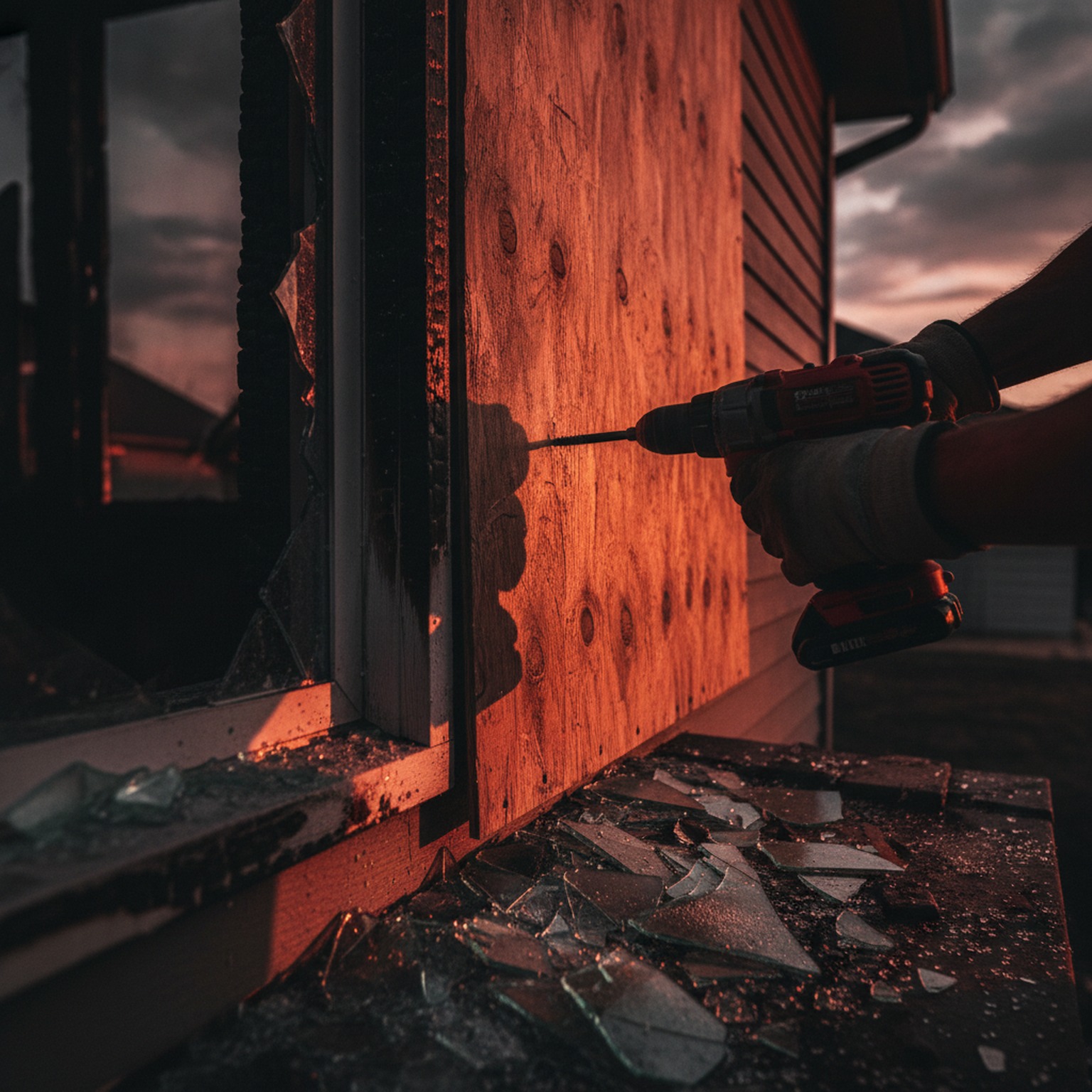
When a window is shattered, a roof is torn open, or a wall is breached, the instinct is to start thinking about the full repair right away. But the actual first move — every time — is securing the structure. Here's why that order matters and what happens next.
What Is Board-Up, Exactly?
Board-up means sealing broken windows, doors, and wall openings, typically with plywood, to close the structure against weather and unauthorized entry. Tarping is the roof equivalent — heavy-duty tarps secured over damaged sections to stop water intrusion until permanent roofing repair can happen.
Why It Comes Before Anything Else
An open structure is a compounding problem. Every hour a roof stays exposed or a window stays broken:
- Weather can get in and turn a wind or impact problem into a water damage problem
- The property is vulnerable to theft or vandalism
- Liability exposure increases if someone enters and gets hurt
- Pests and additional debris can enter through the opening
Board-up and tarping stop all of that immediately, which is why restoration companies treat it as their fastest-priority dispatch — often arriving within hours, ahead of any full damage assessment.
Is a Broken Window Really an Emergency?
If it's a single small window with no active weather threat, it may not need overnight emergency service — but if there's rain, snow, cold temperatures, or a security concern (an unoccupied property, valuables inside, a high-crime area), yes, it should be treated as one. When in doubt, secure it — the cost of board-up is small compared to the cost of water damage or theft from a delayed response.
What a Proper Board-Up Actually Involves
- Plywood cut and fitted to the specific opening, not just propped against it
- Secured with fasteners rated to resist forced entry and wind, not just tape or leaning
- Roof tarps installed with proper anchoring against wind uplift — a loosely draped tarp fails in the next storm
- Commercial properties may need additional signage or security measures depending on local requirements
After the Property Is Secure: What's Next
Once board-up or tarping is complete, the actual assessment happens — and depending on the cause, that might lead into:
- Storm damage repair — roofing, siding, structural repair for wind or hail damage
- Water damage restoration — if weather got in before the board-up or tarp went up
- Reconstruction — if a wall, window, or roof section needs full replacement rather than repair
Board-up and tarping are deliberately temporary. They're not a substitute for the actual repair — they're what buys time to do the repair right instead of rushed.
How Long Does a Tarp or Board-Up Last?
A properly installed tarp can hold for several weeks to a couple of months depending on weather exposure, but it's meant to be a bridge to permanent repair, not a long-term fix. If repairs are delayed for any reason, a tarp should be inspected periodically, especially after additional storms.
The Bottom Line
If your property has a breach — storm damage, a break-in, a structural failure — call for board-up or tarping first, before you even start thinking about the full repair timeline. Securing the structure is what prevents a bad situation from becoming a much worse and more expensive one.
Need emergency board-up or tarping right now? Call 844-967-5247 for 24/7 dispatch — this is our fastest-response service.